Blog

  • Indonesia Advances Toward Higher Ethanol Blending in Gasoline Through E10 and E20 Programs

    Indonesia Advances Toward Higher Ethanol Blending in Gasoline Through E10 and E20 Programs

    Indonesia is preparing to introduce higher ethanol blending levels in gasoline as part of efforts to reduce fuel import dependency and strengthen the domestic biofuel industry. The government is targeting the implementation of 10% ethanol-blended gasoline (E10) in 2027, followed by a gradual increase to 20% ethanol blending (E20) by 2028–2029.

    The policy is part of Indonesia’s broader energy transition strategy, focusing on increasing the use of renewable fuels while developing local bioethanol production capacity.

    Building a Domestic Bioethanol Supply Chain

    The Ministry of Energy and Mineral Resources (ESDM) is completing a study launched in 2025 to establish a roadmap for ethanol blending implementation. The government emphasized that the program will depend on sufficient domestic ethanol availability before mandatory blending targets are introduced.

    Authorities aim to avoid relying on imported ethanol supplies by prioritizing the development of local production capabilities. Potential feedstocks for domestic bioethanol include cassava, sugarcane, corn, and other agricultural commodities that can support ethanol production.

    To support long-term supply, the government is also developing integrated agricultural and processing infrastructure, including sugarcane plantations and downstream biofuel facilities.

    Gradual Implementation Following Biofuel Expansion Model

    The transition from E10 to E20 is planned as a gradual process similar to Indonesia’s previous biodiesel blending programs, which expanded progressively from lower blending levels to higher percentages.

    The phased approach is intended to provide time for industry preparation, infrastructure development, and adjustment across the fuel supply chain, including producers, distributors, and consumers.

    The government is also studying international bioethanol models, particularly Brazil’s flexible sugarcane industry, where producers can adjust between sugar and ethanol production depending on market conditions.

    Reducing Fuel Imports Through Renewable Energy Development

    Increasing ethanol utilization is expected to help reduce Indonesia’s reliance on imported gasoline while supporting domestic agricultural industries. The development of a local bioethanol ecosystem could create additional value from agricultural resources and contribute to national energy security.

    The success of the E10 and E20 programs will depend on several factors, including feedstock availability, production capacity, infrastructure readiness, and coordination between government agencies and industry stakeholders.

    Through these initiatives, Indonesia aims to expand the role of renewable fuels in its transportation sector while developing a more resilient and domestically supported energy system.

    Source: https://jakartaglobe.id/business/indonesia-targets-e10-gasoline-blend-in-2027-e20-by-2028

  • South Andaman Gas Discovery Advances Toward Regional Energy Development in Aceh

    South Andaman Gas Discovery Advances Toward Regional Energy Development in Aceh

    A significant gas discovery in the South Andaman Block offshore Aceh is moving into the development planning stage as the Indonesian government focuses on ensuring the project provides economic benefits for the local region.

    The Ministry of Energy and Mineral Resources (ESDM) is conducting public outreach to provide information about the future management and development of the offshore gas project, including plans to prioritize benefits for communities in Aceh.

    Government Focuses on Local Benefits and Project Development

    The government stated that socialization efforts are important to address public concerns regarding how Aceh will benefit from the development of the South Andaman Block. Discussions are being conducted with regional stakeholders, including academic institutions, to improve public understanding of the project’s potential economic impact.

    The development plan is expected to involve collaboration between government authorities, operators, and local stakeholders to identify solutions that provide benefits for all parties.

    Some communities have expressed interest in having gas processing facilities developed onshore in Aceh. The government is evaluating options while considering technical requirements, existing development plans, and the overall feasibility of the project.

    Deepwater Gas Discovery Supports Future Energy Supply

    The South Andaman Block is operated by Mubadala Energy, an energy company based in the United Arab Emirates, with Harbour Oil as a partner. The project is expected to produce approximately 312 million standard cubic feet per day (MMSCFD) of gas and 7,500 barrels per day of condensate.

    The project is targeted to begin production in 2028, with estimated investment reaching approximately US$1.95 billion based on the approved Plan of Development (POD).

    A gas sales agreement between Mubadala Energy and PT PLN (Persero) has also been completed for the supply of around 160 MMSCFD of gas to support power generation requirements. Additional gas resources from other discoveries remain under evaluation for future utilization.

    Recent exploration success in the South Andaman Block includes the Tangkulo-1 deepwater exploration well, located approximately 65 kilometers offshore northern Sumatra. The well was drilled to a depth of around 3,400 meters in water depths of approximately 1,200 meters.

    Testing results showed gas flow of around 47 MMSCFD and condensate production of approximately 1,300 barrels per day, with estimated potential capacity reaching higher levels based on further evaluation.

    Offshore and Onshore Infrastructure Integration

    The planned development of the South Andaman Block will use a combination of offshore and onshore facilities. Initial processing activities will be conducted offshore using floating production facilities before treated gas is transported to shore through a subsea pipeline.

    The offshore processing approach is designed to handle gas composition challenges, including elevated levels of carbon dioxide (CO₂) and hydrogen sulfide (H₂S), which require treatment before transportation through pipelines.

    Onshore facilities, including an Onshore Receiving Facility (ORF), are planned for development in the Arun Special Economic Zone (KEK Arun), Lhokseumawe. The integrated offshore-onshore approach aims to support safe gas transportation while enabling future utilization of the discovered resources.

    The South Andaman development represents one of Indonesia’s major offshore gas projects and is expected to contribute to domestic energy supply, regional economic development, and long-term gas availability.

    Source: https://www.cnbcindonesia.com/news/20260721154120-4-752621/ada-temuan-gas-jumbo-pemerintah-prioritaskan-manfaat-untuk-warga-aceh

  • Geospace Introduces Pioneer Lightweight Wireless Seismic Acquisition Node

    Geospace Introduces Pioneer Lightweight Wireless Seismic Acquisition Node

    Advances in wireless seismic acquisition technology continue to improve the efficiency of onshore exploration operations. One recent development is the introduction of lightweight seismic nodes designed to simplify field deployment while maintaining high-quality seismic data acquisition.

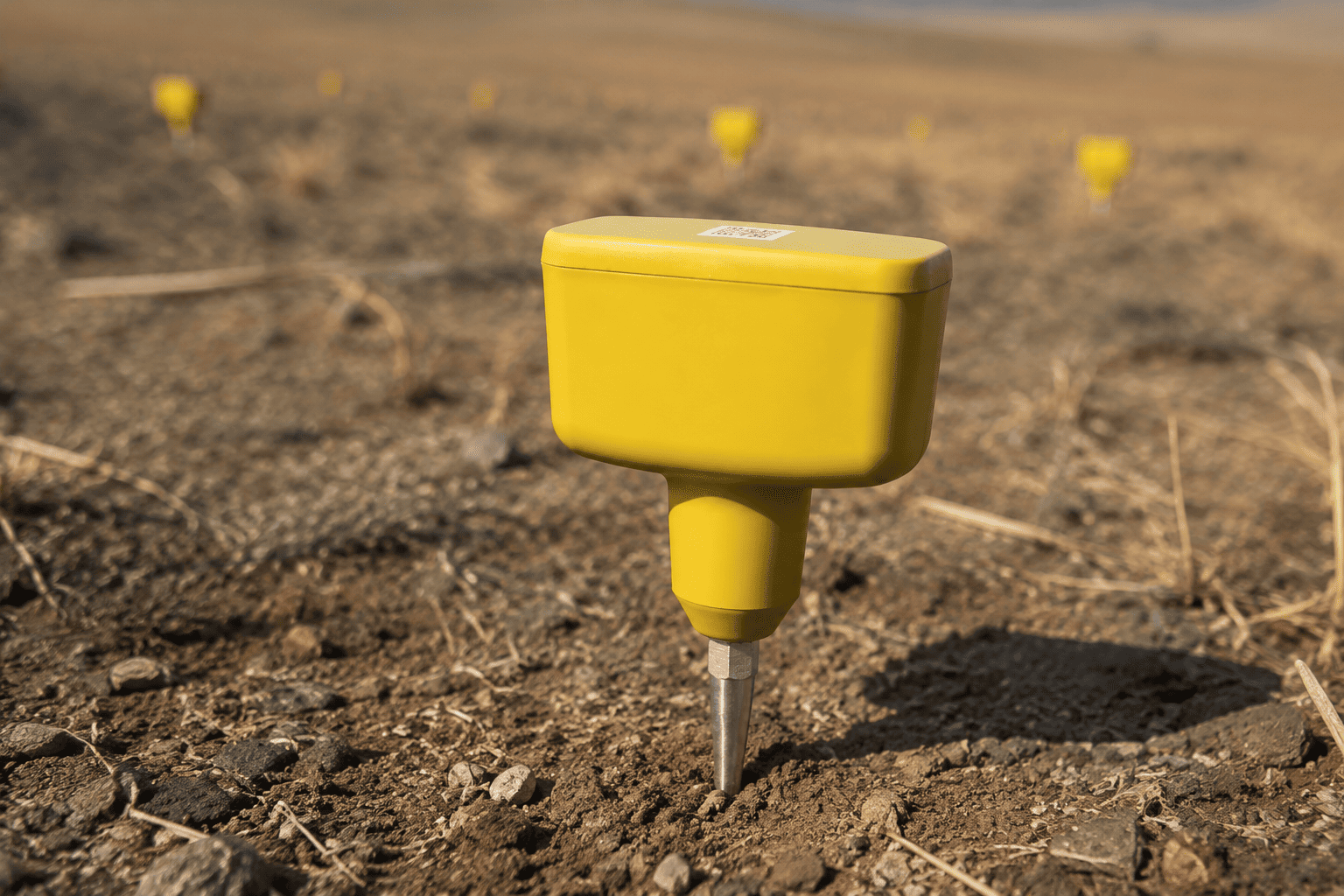
    The new land-based wireless seismic node developed by Geospace demonstrates how modern sensor design, battery technology, and digital acquisition systems are being combined to support more efficient seismic surveys with reduced operational requirements.

    Improving Efficiency in Land Seismic Surveys

    Traditional land seismic surveys require thousands of acquisition nodes to be deployed across large exploration areas, making equipment weight, battery life, and logistics important operational considerations. Lightweight wireless seismic nodes help reduce transportation requirements, simplify deployment, and improve field productivity.

    The newly introduced system weighs less than 0.5 kilograms and integrates a 5 Hz vertical geophone, a 24-bit digitizer, GPS positioning, and an onboard battery into a compact sealed unit. It is designed to support continuous recording for up to 50 days while offering rapid battery charging and data download capabilities.

    Enhancing Data Quality and Operational Performance

    In addition to portability, the system incorporates improved ground coupling and inductive charging technology to simplify field operations and improve durability. Better sensor coupling can enhance the signal-to-noise ratio, allowing higher-quality seismic data to be collected for subsurface imaging and reservoir characterization.

    The combination of long battery life, compact design, and integrated digital acquisition components enables seismic crews to complete surveys more efficiently while reducing operational downtime.

    Source: https://www.geospace.com/news/releases-pioneer-lightweight-long-lasting-land-seismic-data-acquisition-node/

  • Distributed Acoustic Sensing (DAS) Advances Toward Scalable Seismic Monitoring

    Distributed Acoustic Sensing (DAS) Advances Toward Scalable Seismic Monitoring

    Distributed Acoustic Sensing (DAS) is gaining attention as a potential next-generation technology for subsurface monitoring in the oil and gas industry. Through a collaboration between Aker BP and Shearwater, supported by funding from the Research Council of Norway (RCN), researchers are working to advance DAS from a proof-of-concept technology into a practical solution for large-scale 4D seismic monitoring.

    The project, supported by NOK 20 million in public funding, aims to evaluate how fiber-optic sensing technology can complement existing seismic monitoring methods and improve the efficiency of subsurface data acquisition.

    Improving Subsurface Monitoring with DAS

    Conventional reservoir monitoring commonly relies on technologies such as Ocean Bottom Nodes (OBN) and towed streamer seismic surveys. These methods provide high-quality subsurface information but can involve significant operational complexity, time requirements, and costs.

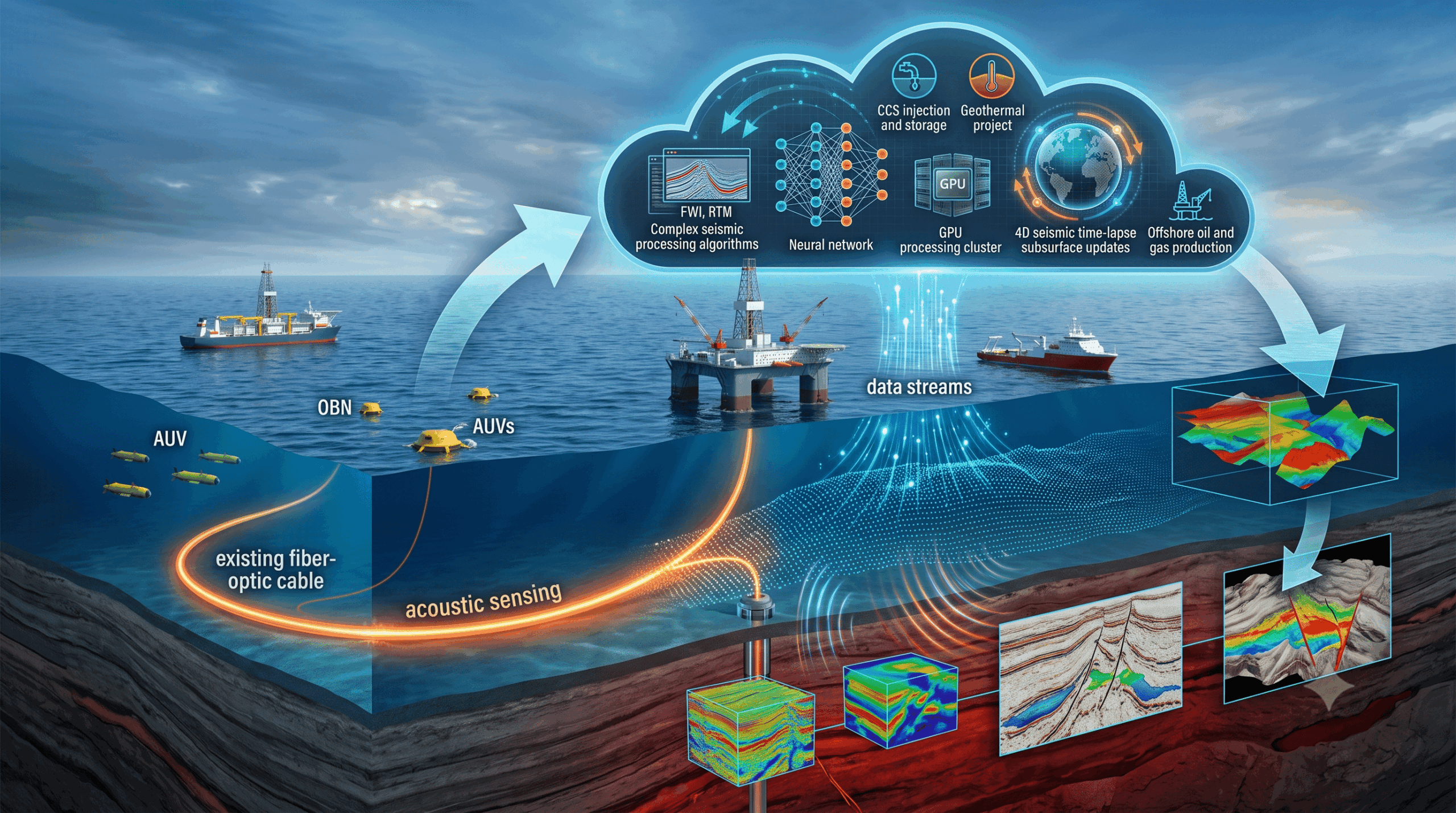
    DAS offers an alternative approach by transforming existing fiber-optic cables into dense seismic sensing arrays. This capability allows operators to collect seismic information across large areas without requiring extensive deployment of traditional sensing equipment.

    By utilizing existing fiber infrastructure, DAS has the potential to reduce acquisition time, lower operational costs, and decrease the environmental impact associated with seismic surveys.

    Advancing DAS Technology for Field Applications

    The Aker BP and Shearwater project focuses on developing DAS into a reliable field-ready monitoring technology. Over a four-year development period, the project will investigate several key areas, including:

    • Comparing DAS performance with Ocean Bottom Node (OBN) systems using data from the Edvard Grieg field.
    • Optimizing seismic imaging workflows, including Full Waveform Inversion (FWI) and Reverse Time Migration (RTM), for DAS datasets.
    • Applying machine learning techniques to quantify uncertainty in subsurface models and seismic images.
    • Improving scalability through GPU-based computing infrastructure.
    • Developing monitoring strategies designed specifically for surface-based and well-based DAS applications.

    These efforts aim to improve the ability of operators to obtain high-value subsurface insights while reducing the cost and complexity of seismic monitoring.

    Combining DAS and Traditional Seismic Methods

    The development of DAS is not intended to completely replace existing technologies such as OBN. Instead, DAS can provide additional flexibility by complementing conventional monitoring approaches.

    The combination of DAS and OBN could enable more frequent seismic surveys, faster data acquisition, and improved understanding of reservoir changes over time. This approach may be particularly valuable for applications such as mature oil fields, carbon capture and storage (CCS), and geothermal projects, where continuous and cost-effective monitoring is important.

    Integration with AI and Advanced Computing

    A key component of the project is the integration of advanced computing and machine learning technologies. The developed workflows will be incorporated into Shearwater’s geophysical processing platforms, including advanced seismic imaging tools and machine learning frameworks.

    AI-based methods will be used to analyze subsurface uncertainty and improve interpretation of complex seismic datasets. Combined with GPU-powered computing, these technologies are expected to support faster processing and scalable monitoring solutions.

    Supporting Lower-Emission Offshore Operations

    Beyond improving efficiency, DAS-based monitoring could contribute to reducing the environmental footprint of offshore seismic operations. By decreasing the need for large-scale survey campaigns and enabling more frequent data collection, DAS has the potential to reduce emissions and operational risks.

    The project represents a broader industry movement toward smarter, more sustainable subsurface monitoring methods by combining fiber-optic sensing, artificial intelligence, and high-performance computing.

    By 2029, Aker BP and Shearwater aim to demonstrate an integrated DAS monitoring workflow capable of supporting oil and gas operations, CCS projects, and geothermal developments with improved efficiency, reliability, and scalability.

    Source: https://www.shearwatergeo.com/news/das-is-ready-for-prime-time

  • AI for faster seismic analysis: ExxonMobil’s Offshore Exploration as an Example

    AI for faster seismic analysis: ExxonMobil’s Offshore Exploration as an Example

    Artificial intelligence (AI) is increasingly being adopted in the oil and gas industry to improve the processing and interpretation of seismic data. By combining machine learning algorithms with high-performance computing (HPC), companies can analyze large subsurface datasets more efficiently and support faster geological evaluations.

    One example of this implementation is ExxonMobil’s use of AI technologies in its offshore Guyana operations. The company has applied deep learning, classification, and other AI-based approaches to assist seismic interpretation workflows in the Stabroek Block. These tools help identify potential geological features and prioritize areas that require further review by geoscientists.

    Traditionally, seismic interpretation involves analyzing large volumes of complex data generated from sound-wave surveys to create images of underground geological structures. The process can require significant time and expertise, particularly in large offshore exploration projects. AI-assisted workflows aim to accelerate this process by automatically detecting patterns and highlighting important features within seismic datasets.

    ExxonMobil has also invested in advanced computing infrastructure, including its “Discovery 6” supercomputer, to support activities such as seismic imaging, reservoir modeling, and simulation. These capabilities demonstrate how high-performance computing and AI can be integrated into exploration workflows to improve data processing efficiency.

    Beyond ExxonMobil, the adoption of AI in seismic analysis represents a broader trend across the energy industry. Machine learning techniques are being explored for applications such as seismic interpretation, fault detection, reservoir characterization, and production optimization. These technologies are expected to complement, rather than replace, the expertise of geoscientists by providing additional analytical capabilities for complex subsurface decision-making.

    Source: https://oilnow.gy/featured/exxonmobil-using-ai-to-speed-up-seismic-data-analysis-in-guyanas-offshore-acreage/

  • Middle East Tensions Renew Inflation Concerns as Oil Prices Remain Elevated

    Middle East Tensions Renew Inflation Concerns as Oil Prices Remain Elevated

    Renewed geopolitical tensions in the Middle East are increasing concerns that persistently high oil prices could fuel another wave of global inflation. According to market analysts, continued disruptions to energy markets may complicate the outlook for central banks and place additional pressure on energy-importing economies.

    Although oil prices fluctuated during the week, they remained elevated as uncertainty surrounding regional developments continued to influence global energy markets.

    Higher Energy Prices Could Increase Inflationary Pressure

    Analysts suggest that sustained increases in crude oil prices could contribute to higher headline inflation worldwide. BlackRock estimates that the ongoing conflict could add approximately 0.8 percentage points to global headline inflation, although the impact is expected to vary across regions.

    Countries that rely heavily on imported energy, particularly in Europe and parts of Asia, are likely to face greater exposure to rising energy costs. Higher fuel prices can increase transportation, manufacturing, and electricity costs, which may eventually be reflected in consumer prices.

    In addition to geopolitical risks, concerns over shipping disruptions through strategic energy routes continue to influence market sentiment and oil price volatility.

    Central Banks May Maintain a Cautious Monetary Policy

    Higher energy prices could also affect monetary policy decisions. Analysts from OCBC noted that a renewed energy shock may reinforce inflation risks, particularly as labor market conditions remain relatively stable.

    Market participants also expect the U.S. Federal Reserve to maintain a cautious stance if inflationary pressures persist. Elevated oil prices could delay expectations for monetary policy easing until energy markets show signs of greater stability.

    Investment strategists emphasize that continued geopolitical uncertainty highlights the importance of portfolio diversification, as energy market volatility may continue to influence inflation, financial markets, and the broader global economic outlook.

    Spurce: https://www.cnbc.com/2026/07/21/inflation-fears-return-as-iran-war-keeps-oil-prices-high-analysts.html