Category: Technology News

  • Geospace Introduces Pioneer Lightweight Wireless Seismic Acquisition Node

    Geospace Introduces Pioneer Lightweight Wireless Seismic Acquisition Node

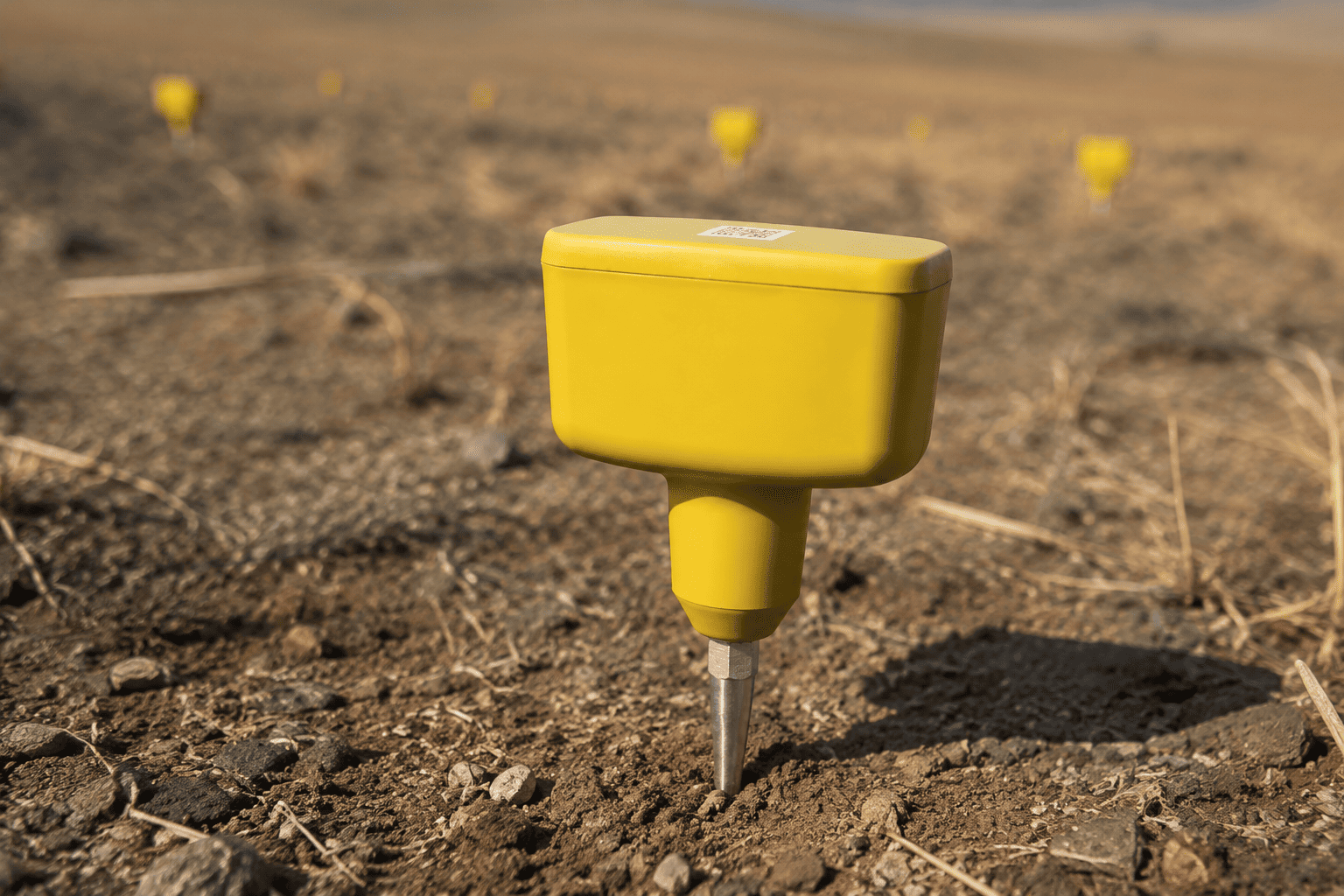
    Advances in wireless seismic acquisition technology continue to improve the efficiency of onshore exploration operations. One recent development is the introduction of lightweight seismic nodes designed to simplify field deployment while maintaining high-quality seismic data acquisition.

    The new land-based wireless seismic node developed by Geospace demonstrates how modern sensor design, battery technology, and digital acquisition systems are being combined to support more efficient seismic surveys with reduced operational requirements.

    Improving Efficiency in Land Seismic Surveys

    Traditional land seismic surveys require thousands of acquisition nodes to be deployed across large exploration areas, making equipment weight, battery life, and logistics important operational considerations. Lightweight wireless seismic nodes help reduce transportation requirements, simplify deployment, and improve field productivity.

    The newly introduced system weighs less than 0.5 kilograms and integrates a 5 Hz vertical geophone, a 24-bit digitizer, GPS positioning, and an onboard battery into a compact sealed unit. It is designed to support continuous recording for up to 50 days while offering rapid battery charging and data download capabilities.

    Enhancing Data Quality and Operational Performance

    In addition to portability, the system incorporates improved ground coupling and inductive charging technology to simplify field operations and improve durability. Better sensor coupling can enhance the signal-to-noise ratio, allowing higher-quality seismic data to be collected for subsurface imaging and reservoir characterization.

    The combination of long battery life, compact design, and integrated digital acquisition components enables seismic crews to complete surveys more efficiently while reducing operational downtime.

    Source: https://www.geospace.com/news/releases-pioneer-lightweight-long-lasting-land-seismic-data-acquisition-node/

  • Distributed Acoustic Sensing (DAS) Advances Toward Scalable Seismic Monitoring

    Distributed Acoustic Sensing (DAS) Advances Toward Scalable Seismic Monitoring

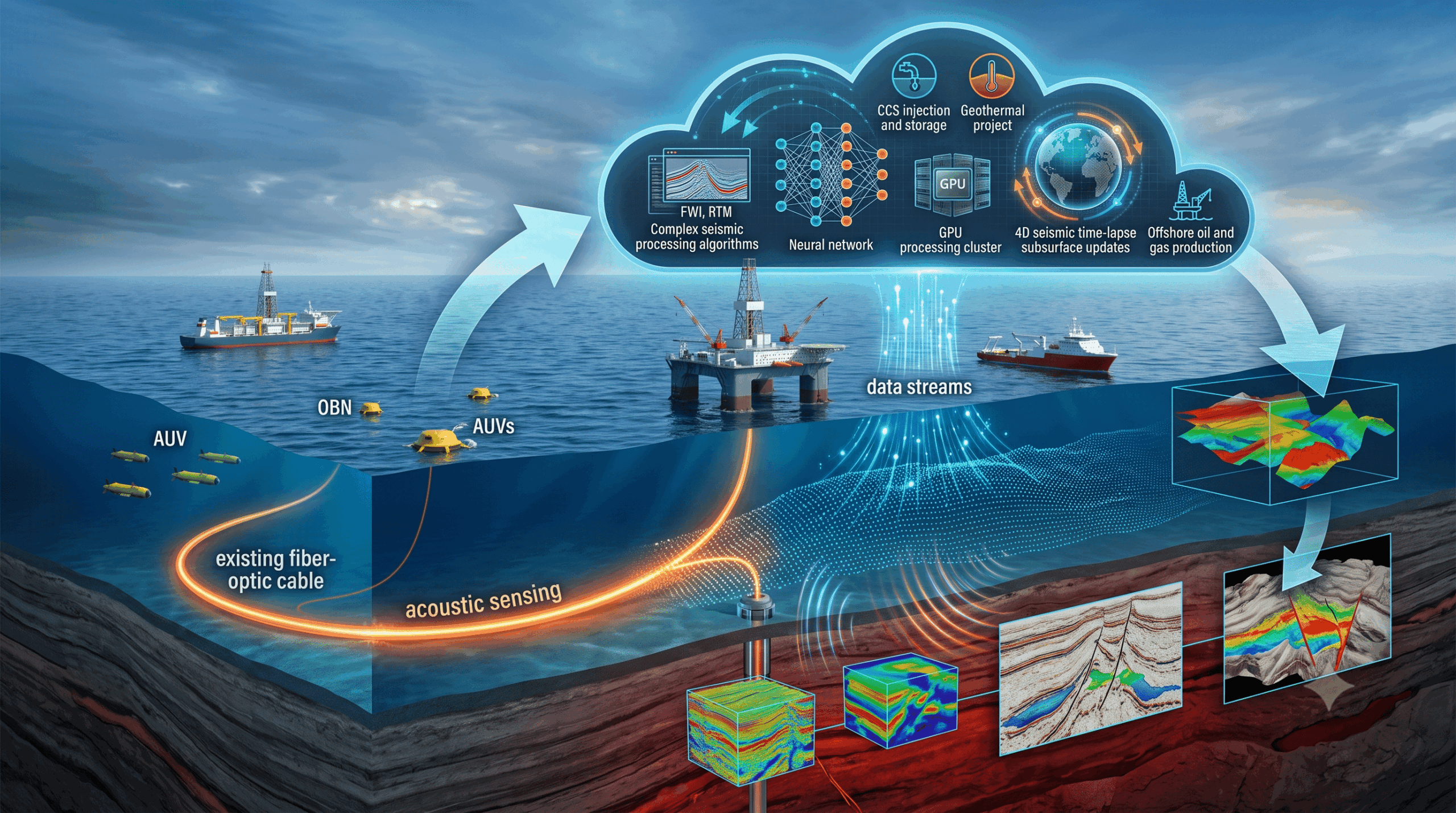
    Distributed Acoustic Sensing (DAS) is gaining attention as a potential next-generation technology for subsurface monitoring in the oil and gas industry. Through a collaboration between Aker BP and Shearwater, supported by funding from the Research Council of Norway (RCN), researchers are working to advance DAS from a proof-of-concept technology into a practical solution for large-scale 4D seismic monitoring.

    The project, supported by NOK 20 million in public funding, aims to evaluate how fiber-optic sensing technology can complement existing seismic monitoring methods and improve the efficiency of subsurface data acquisition.

    Improving Subsurface Monitoring with DAS

    Conventional reservoir monitoring commonly relies on technologies such as Ocean Bottom Nodes (OBN) and towed streamer seismic surveys. These methods provide high-quality subsurface information but can involve significant operational complexity, time requirements, and costs.

    DAS offers an alternative approach by transforming existing fiber-optic cables into dense seismic sensing arrays. This capability allows operators to collect seismic information across large areas without requiring extensive deployment of traditional sensing equipment.

    By utilizing existing fiber infrastructure, DAS has the potential to reduce acquisition time, lower operational costs, and decrease the environmental impact associated with seismic surveys.

    Advancing DAS Technology for Field Applications

    The Aker BP and Shearwater project focuses on developing DAS into a reliable field-ready monitoring technology. Over a four-year development period, the project will investigate several key areas, including:

    • Comparing DAS performance with Ocean Bottom Node (OBN) systems using data from the Edvard Grieg field.
    • Optimizing seismic imaging workflows, including Full Waveform Inversion (FWI) and Reverse Time Migration (RTM), for DAS datasets.
    • Applying machine learning techniques to quantify uncertainty in subsurface models and seismic images.
    • Improving scalability through GPU-based computing infrastructure.
    • Developing monitoring strategies designed specifically for surface-based and well-based DAS applications.

    These efforts aim to improve the ability of operators to obtain high-value subsurface insights while reducing the cost and complexity of seismic monitoring.

    Combining DAS and Traditional Seismic Methods

    The development of DAS is not intended to completely replace existing technologies such as OBN. Instead, DAS can provide additional flexibility by complementing conventional monitoring approaches.

    The combination of DAS and OBN could enable more frequent seismic surveys, faster data acquisition, and improved understanding of reservoir changes over time. This approach may be particularly valuable for applications such as mature oil fields, carbon capture and storage (CCS), and geothermal projects, where continuous and cost-effective monitoring is important.

    Integration with AI and Advanced Computing

    A key component of the project is the integration of advanced computing and machine learning technologies. The developed workflows will be incorporated into Shearwater’s geophysical processing platforms, including advanced seismic imaging tools and machine learning frameworks.

    AI-based methods will be used to analyze subsurface uncertainty and improve interpretation of complex seismic datasets. Combined with GPU-powered computing, these technologies are expected to support faster processing and scalable monitoring solutions.

    Supporting Lower-Emission Offshore Operations

    Beyond improving efficiency, DAS-based monitoring could contribute to reducing the environmental footprint of offshore seismic operations. By decreasing the need for large-scale survey campaigns and enabling more frequent data collection, DAS has the potential to reduce emissions and operational risks.

    The project represents a broader industry movement toward smarter, more sustainable subsurface monitoring methods by combining fiber-optic sensing, artificial intelligence, and high-performance computing.

    By 2029, Aker BP and Shearwater aim to demonstrate an integrated DAS monitoring workflow capable of supporting oil and gas operations, CCS projects, and geothermal developments with improved efficiency, reliability, and scalability.

    Source: https://www.shearwatergeo.com/news/das-is-ready-for-prime-time
  • AI for faster seismic analysis: ExxonMobil’s Offshore Exploration as an Example

    AI for faster seismic analysis: ExxonMobil’s Offshore Exploration as an Example

    Artificial intelligence (AI) is increasingly being adopted in the oil and gas industry to improve the processing and interpretation of seismic data. By combining machine learning algorithms with high-performance computing (HPC), companies can analyze large subsurface datasets more efficiently and support faster geological evaluations.

    One example of this implementation is ExxonMobil’s use of AI technologies in its offshore Guyana operations. The company has applied deep learning, classification, and other AI-based approaches to assist seismic interpretation workflows in the Stabroek Block. These tools help identify potential geological features and prioritize areas that require further review by geoscientists.

    Traditionally, seismic interpretation involves analyzing large volumes of complex data generated from sound-wave surveys to create images of underground geological structures. The process can require significant time and expertise, particularly in large offshore exploration projects. AI-assisted workflows aim to accelerate this process by automatically detecting patterns and highlighting important features within seismic datasets.

    ExxonMobil has also invested in advanced computing infrastructure, including its “Discovery 6” supercomputer, to support activities such as seismic imaging, reservoir modeling, and simulation. These capabilities demonstrate how high-performance computing and AI can be integrated into exploration workflows to improve data processing efficiency.

    Beyond ExxonMobil, the adoption of AI in seismic analysis represents a broader trend across the energy industry. Machine learning techniques are being explored for applications such as seismic interpretation, fault detection, reservoir characterization, and production optimization. These technologies are expected to complement, rather than replace, the expertise of geoscientists by providing additional analytical capabilities for complex subsurface decision-making.

    Source: https://oilnow.gy/featured/exxonmobil-using-ai-to-speed-up-seismic-data-analysis-in-guyanas-offshore-acreage/